Article contents
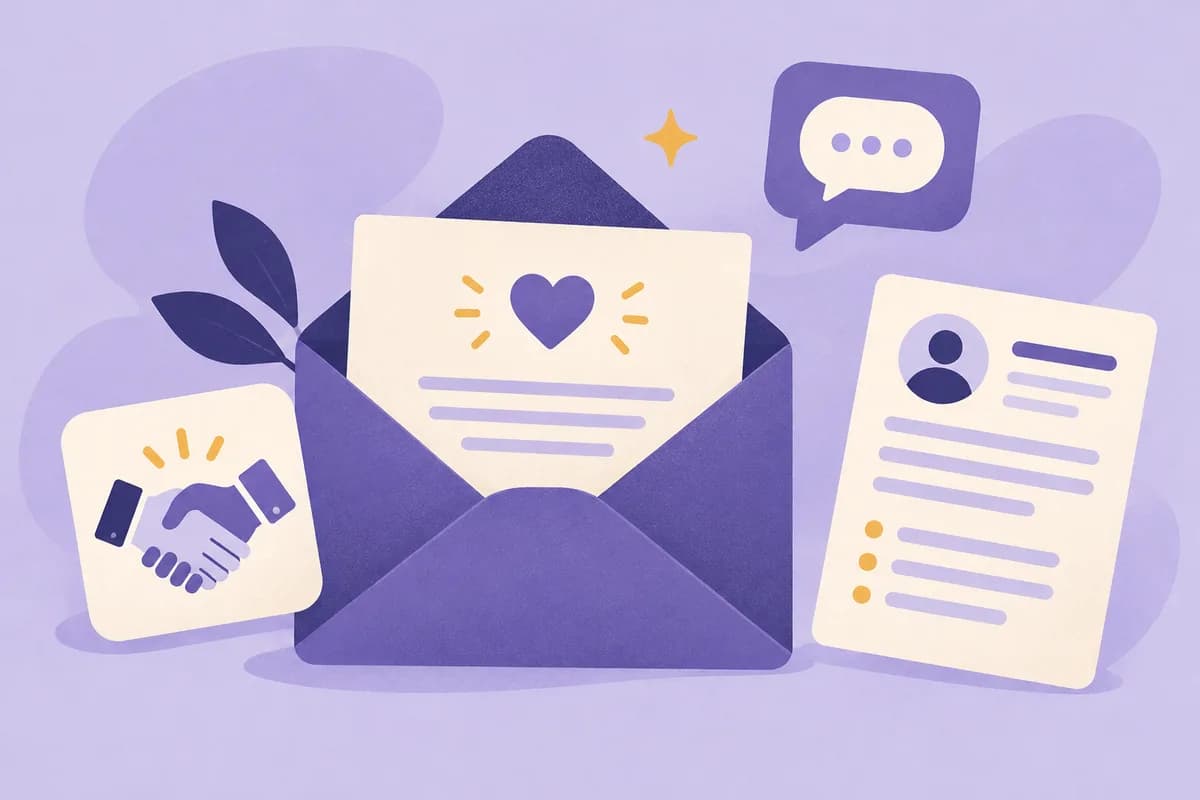
Most of us know we should say thank you at work. Far fewer of us do it well. The usual result is either silence or a stock phrase like "Thanks for your valuable time" that could have been sent to anyone. A professional thank-you message works when it is specific: it names what the other person did, says what difference it made and, if it fits, opens a door for the future.
Below you will find a simple framework, templates for the situations you will actually face, guidance on tone for different workplaces, and the slips that turn a kind gesture into an awkward one.
Why a thank-you note is worth the two minutes
People remember how they were treated more than what they were told. A short, specific note signals that you noticed someone's effort and that it mattered. It is a small habit with an outsized effect:
- After a job interview, it keeps you fresh in the interviewer's mind and shows genuine interest.
- To a colleague, it builds goodwill and makes the next request for help easier.
- To a manager or mentor, it reinforces the relationship that supports your growth.
- To a client, it turns a transaction into a relationship.
- On leaving a job, it protects your reputation and the references you may need later.
A four-part structure that always works
Whatever the situation, most good thank-you messages contain the same four ingredients.
- The thanks, up front. Do not bury it in the second paragraph.
- The specific action. A code review, an hour of advice, an introduction, a reference.
- The impact. What did it allow you to do or understand?
- The next step. A follow-up, an offer to return the favour, or nothing at all if it would feel forced.
Quick test: could this message be sent, unchanged, to someone else? If yes, add one detail only this person would recognise.
Timing and channel
Send an interview thank-you within 24 hours, ideally the same evening or the next morning. For everyday help, thank the person within a day. A late thank-you still beats none, but it loses weight with every passing week.
Email is the safe default for formal situations. Chat is fine for quick favours between teammates. For a significant act of support, such as a manager who backed you through a hard project, a handwritten card or a word in person can mean more than any email.
Templates you can adapt
Replace anything in brackets with your own details.
After a job interview
Subject: Thank you, [Role] conversation
"Hi [Name],
Thank you for speaking with me on [day] about the [Role] position. I particularly enjoyed our discussion about [specific topic: how the team handles X, the upcoming Y project]. It gave me a clearer picture of the role, and it made me even more interested in contributing to [goal].
If it would be helpful, I am happy to share more detail about [relevant experience mentioned in the interview]. Thank you again, and I look forward to hearing about next steps.
Best regards, [Your name]"
This note is brief, references something real from the conversation and does not demand a reply. It is most effective when the application documents behind it are solid, so take a moment to tailor your CV to each job posting.
To a colleague who helped you
"Hi [Name],
Thanks so much for helping with [project]. Taking the time to review my slides meant I caught [issue] before the client meeting, and the budget was approved. If I can return the favour on your next deadline, just say the word.
[Your name]"
To a manager
"Hi [Name],
I wanted to thank you for the time you have invested in my development this year. Your feedback on [specific example, such as how I structure my proposals] has made a real difference, and it gave me the confidence to take on [new responsibility]. I appreciate it more than I have probably said.
[Your name]"
To a client or partner
"Dear [Name],
Thank you for trusting us with [project]. Working with a team that responds so quickly made each stage easier. We are glad to support you with what comes next, and I would be happy to set up a short check-in on [date].
Kind regards, [Your name]"
When leaving a job
"Hi everyone,
After [length of time] at [Company], my last day will be [date]. I want to thank you for what I have learned here, especially [specific lesson or skill]. I will remember [shared project or moment] for a long time.
I would love to keep in touch: you can reach me at [LinkedIn or personal email].
[Your name]"
To someone who wrote you a reference
"Hi [Name],
Thank you for agreeing to be a reference for the [Role] position at [Company]. I know it takes time, and your support means a lot because you have seen my work first-hand. I will let you know how the process goes, and I would be glad to return the favour any time.
[Your name]"
Matching tone to workplace and region
Workplace norms vary. A US startup email can be warm and casual, while a London law firm or a Paris bank usually expects a more formal register. Read your recipient's own messages and mirror their level, then lean slightly more formal when in doubt. Keep the same structure; only the vocabulary changes.
| Recipient | Tone | Typical length |
|---|---|---|
| Interviewer | Polite, warm | 4 to 6 sentences |
| Close colleague | Casual, direct | 2 to 3 sentences |
| Manager | Respectful, specific | 3 to 5 sentences |
| Client | Professional, relationship-focused | 3 to 5 sentences |
| Departing team | Personal, brief | 5 to 8 sentences |
Common mistakes
- Generic phrasing. "Thank you for your valuable time" says nothing about what actually happened.
- Over-the-top praise. Superlatives ring hollow. One concrete detail beats three adjectives.
- Hiding a request inside the thanks. Asking for something significant in the same message weakens both the thanks and the ask.
- Writing too much. If it takes more than a minute to read, it is too long.
- Careless errors. Check the recipient's name, the job title and the subject line before sending.
- Sounding anxious. After an interview, avoid lines like "I know you are very busy, so I understand if you have not had time". Stay confident and factual.
What to do next
A thank-you is not the end of the interaction. After an interview, note the date and plan a courteous follow-up if the promised timeline passes. After receiving help, watch for an opportunity to return the favour: that is how professional relationships are built.
If you are job hunting, use this momentum to review your materials. Our guide to CV mistakes that cost interviews is a good checklist, and a clean template from our gallery will save you formatting time.
Frequently asked questions
Should I always send a thank-you after an interview?
It is not mandatory, but it is a good habit. A short note within 24 hours shows interest and reminds the interviewer of your application. It will not rescue a weak interview, but it can tip a close decision.
Is a text or chat message acceptable?
For a close colleague or a quick favour, yes, if that is how your team communicates. For recruiters, clients and senior leaders, use email.
What sign-off should I use?
"Best regards" and "Kind regards" work almost everywhere. "Best" or "Thanks again" suit informal exchanges. Match the formality of the person you are writing to.
Should I thank the interviewer if I was rejected?
Yes. A brief, gracious note thanking them for their consideration and asking to stay in touch leaves a strong impression, and recruiters often remember it when another role opens up.
How long should a thank-you email be?
Three to six sentences is plenty. The specific detail you cite matters far more than the length.
Conclusion
A professional thank-you message is sincere, specific and short. Say thanks straight away, name what the person did, explain the difference it made and offer a next step only if it feels natural. With that simple structure and one personal detail, you write the kind of note people actually remember.
When your next application is ready to go, build your resume with the GoMyCV builder and download a polished PDF in minutes.